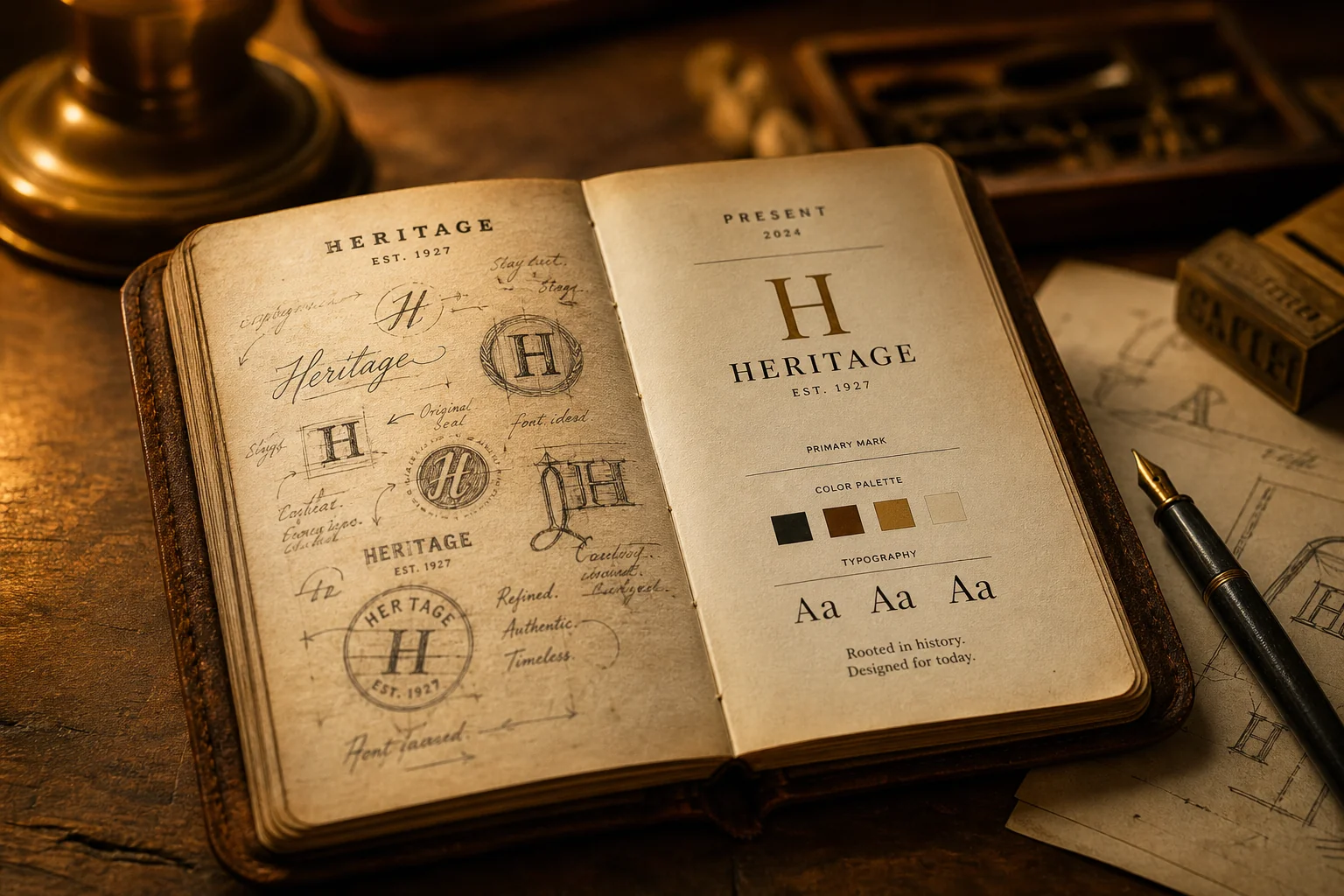
Think about the brands you genuinely trust. Not the ones you use out of habit or convenience. The ones you'd feel something if they disappeared. The ones whose products you keep, whose stories you tell others, whose values you'd actually defend. Chances are, most of those brands have been around for a long time.
That's not a coincidence. Brand longevity isn't luck. It's architecture. The brands that endure are built on a set of principles that most businesses either don't know about or aren't patient enough to execute. Understanding those principles is the difference between a brand that trends and one that lasts.
Brand Purpose: The Foundation Every Lasting Brand Is Built On
The brands that last know exactly why they exist, and it's never just to make money. Purpose is the answer to the question every great brand must be able to answer clearly: "Why should anyone care?"
Purpose gives a brand a fixed point to return to when everything else shifts. Markets change. Technology disrupts. Founders leave. Teams turn over. But a brand with a clear, deeply held purpose can weather all of it, because the purpose doesn't depend on any of those variables.
The mistake most brands make is confusing purpose with mission. A mission is directional: it describes what you're trying to achieve. Purpose is existential: it describes why your existence matters to the world. Patagonia's purpose isn't to sell outdoor clothing. It's to protect the environment. Nike's isn't to sell shoes. It's to bring inspiration and innovation to every athlete.
A brand without purpose isn't a brand. It's a product with a logo. Products get replaced. Brands get defended.
For South African businesses, purpose is often rooted in something genuinely powerful: community, heritage, local craftsmanship, economic transformation. The brands that tap into these roots and articulate them clearly have a narrative advantage that imported competitors simply can't replicate.
Brand Consistency: The Compounding Advantage Most Businesses Underestimate
Trust is built through repetition. This is perhaps the most underappreciated truth in brand building. Every time you deliver on your promise, every time the product works exactly as expected, the experience delights in the way it always does, the visual identity shows up consistently across every touchpoint, you make a small deposit into the bank account of brand equity.
Those deposits compound. A brand that's been consistent for five years has an equity advantage over a newer competitor that no amount of creative advertising can close quickly. Customers have learned to trust it through repeated positive experience. That trust is an asset on the balance sheet, even if it doesn't appear there.
Consistency doesn't mean being static. It means being reliably yourself: maintaining your core visual language, your tone of voice, your quality standards, and your values, even as the specific executions evolve. The brands that fall apart are usually the ones that prioritise novelty over continuity.
Heritage vs. Nostalgia: Why the Difference Defines Brand Longevity
There is a critical difference between a brand with heritage and a brand that's stuck in the past. Understanding the difference is essential for long-term brand health.
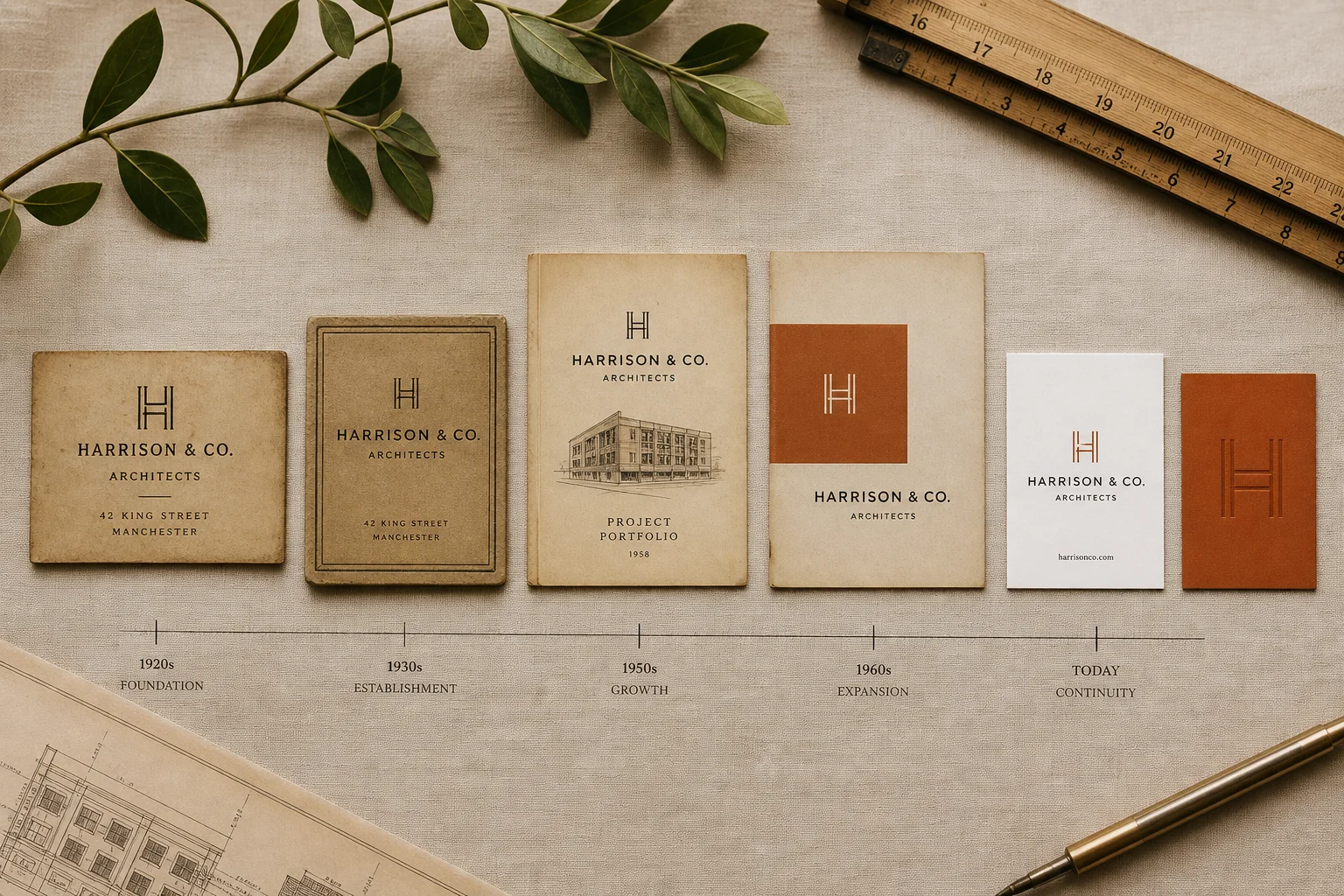
Heritage is the story of where you came from: the founding moment, the craft traditions, the early struggles and breakthroughs that shaped who you are today. Heritage is active. It's the foundation from which the brand grows. Brands with genuine heritage use their history as fuel: proof of authenticity, a reason to believe, a story that compounds in richness over time.
Nostalgia is using the past as a substitute for a present-tense reason to exist. It's the brand that keeps reviving its 1980s logo not because that era defines its values, but because it doesn't know what to say about who it is today. Nostalgia is defensive. It signals a brand that's looking backward because it's uncertain about the future.
The brands that last know how to honour their heritage while remaining genuinely relevant. They're not trying to be what they were. They're growing from what they were into something more.
Emotional Brand Resonance: Why Feelings Drive Brand Loyalty
Rational arguments close deals. Emotional connections build brands. This is one of the most reliable findings across decades of consumer psychology research, and it has enormous practical implications for how brands should invest their marketing resources.
When a brand makes you feel something genuine, whether belonging, aspiration, confidence, joy, nostalgia, or pride, it transcends the product category. You're not just buying soap; you're participating in a certain kind of life. You're not buying running shoes; you're joining a community of people who push themselves. That emotional layer is what competitors can't easily copy, because it's built through years of consistent cultural investment, not a single product improvement.
For South African brands, the emotional territory is rich and relatively unexplored. Pride in local craft. The complexity of our shared history. The energy of a continent on the rise. The warmth of community. These are emotional frequencies that resonate deeply with local audiences and, increasingly, with global ones too.
Brand Design: Why Visual Consistency Builds Long-Term Recognition
Design isn't decoration. For enduring brands, design is a system, a visual language that communicates values without words. Think about the brands you'd recognise from a colour alone, a shape, a typeface. That level of recognition isn't accidental. It's the result of consistent, intentional design investment applied across years and decades.
The design decisions that matter most for brand longevity:
- Logo architecture: a mark that works at every scale, in every context, and doesn't date itself to a specific design era
- Colour ownership: a distinctive palette that becomes so associated with the brand that it functions as a trademark in itself
- Typography as personality: typeface choices that carry the brand's character, from authoritative to playful to refined
- Spatial consistency: the way a brand uses white space, margin, and layout across all materials signals its confidence and taste
- Photography and visual language: a consistent point of view on how the brand represents the world visually
Brands that change their visual identity frequently, chasing design trends, rarely build lasting recognition. The brands that hold their design system firmly, evolving it gently rather than reinventing it regularly, compound their visual equity year over year.
Brand Community: The Competitive Advantage No One Can Copy
The most durable competitive advantage a brand can build is a community. Not a following, not an audience. A genuine community of people who feel connected to each other through their shared relationship with the brand.
Communities are almost impossible to replicate. You can copy a product. You can match a price. You can mimic a visual identity. But you cannot manufacture the belonging, the inside references, the shared history, and the collective pride that a real community generates.
The brands that have built lasting communities, from motorcycle manufacturers to running shoe labels to independent coffee shops, all share a common approach: they create spaces (physical or digital) where their customers can find each other. See how LMP has built community-centred digital presences for South African brands in our portfolio of work. They celebrate their most passionate advocates. They make belonging visible and desirable.
Brand Adaptability: How to Evolve Without Losing What Makes You Distinctive
The world changes. Consumer tastes shift. Technology disrupts entire categories. Culture evolves in ways that make previously neutral brand associations problematic. The brands that survive over the long term are the ones that can adapt without losing what made them distinctive.
This is the hardest balance to strike in brand management. Change too little and you become irrelevant. Change too much and you become unrecognisable, destroying the accumulated trust and equity that took years to build.
The principle that guides the best brand stewards: change the expression, preserve the essence. The essence is your purpose, your values, your core personality. The expression is how those things manifest in a specific cultural moment: the language you use, the visual style you adopt, the channels you prioritise. The essence should be almost immovable. The expression should be continuously refined.
The Long Game: Why Brand Equity Compounds Over Time
Building a brand that lasts requires something that's increasingly rare in business: patience. The compounding returns of brand equity don't show up in quarterly results. They show up over years and decades, as the accumulated weight of consistent quality, clear purpose, and genuine emotional connection become an asset that no competitor can replicate quickly.
The brands we admire most, the ones that have become cultural institutions rather than mere businesses, all paid the price of patience. They made decisions that sacrificed short-term gain for long-term positioning. They held their values when holding them was expensive. They invested in craft and consistency when the market would have rewarded cutting corners.
For South African businesses with genuine ambition, this is the challenge and the opportunity. The local market is full of short-term thinking. Brands that commit to the long game, to building something with genuine depth, heritage, and community, are playing a different game entirely, and it's one they can win.
Building a Lasting Brand: Final Thoughts
Building a brand that lasts isn't a strategy you implement. It's a commitment you make: to your purpose, to your craft, to your audience, and to the slow, patient work of earning trust over time.
The brands that endure aren't the ones with the biggest budgets or the cleverest campaigns. They're the ones that knew what they stood for, said it clearly, and delivered on it consistently, day after day, year after year, until the brand became something customers couldn't imagine their world without.
That's what we're building at LMP, for our clients and for ourselves. Not the loudest brand. The most trusted one.