
A potential client finds your business. Maybe it's through a Google search, a referral, or a social media post. They land on your website. Within seven seconds, they've already formed an opinion about your credibility, your professionalism, and whether they'll trust you with their money.
They haven't spoken to you. They haven't read your full service offering. They haven't even scrolled past the fold. But the decision is already leaning one way or the other, and your website is the only thing that determined it.
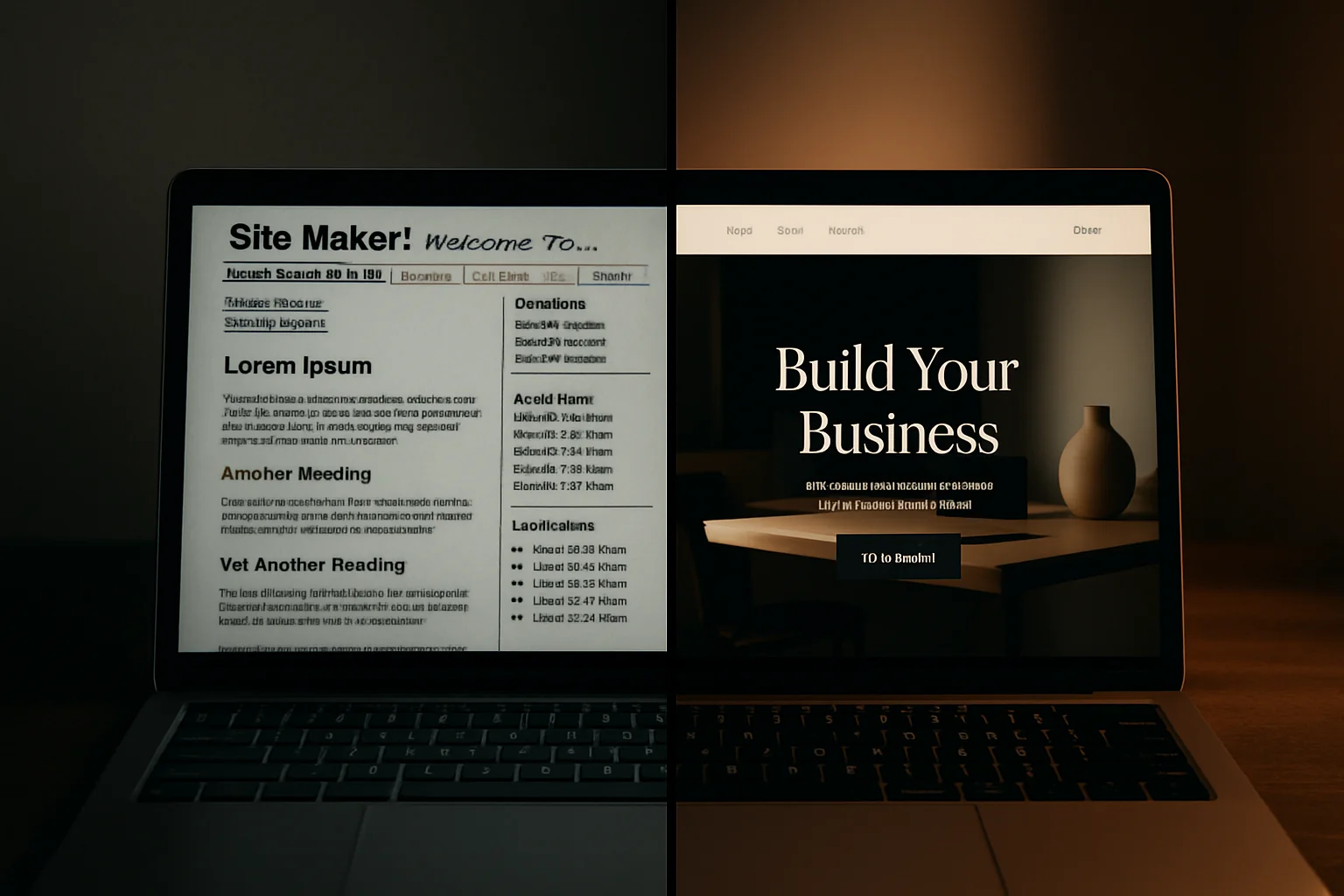
For many South African SMEs, this is the conversation no one is having. The website gets built once, maybe five or six years ago, and then it sits there. Unoptimised. Slow. Outdated. And quietly costing the business clients every single day.
The 7-Second Credibility Test Every Visitor Runs Without Knowing It
Humans make trust judgements faster than conscious thought. Research published in the journal Behaviour and Information Technology found that it takes as little as 50 milliseconds for users to form a visual impression of a website. That impression correlates directly with whether they stay or leave.
What they're measuring in that fraction of a second is not your service quality. They can't know that yet. What they're measuring is visual signal: does this look like a business I can trust? Does this look current? Does this look like the kind of company that has its act together?
An outdated design, mismatched fonts, a layout that breaks on mobile, or a hero image that looks like it was sourced from 2014 clipart - any of these signals the same thing: this business doesn't pay attention to detail. And if they don't pay attention to their own shopfront, why would a client expect them to pay attention to theirs?
Your website is not a brochure. It's a salesperson. One that works 24 hours a day, 7 days a week - and currently, it may be giving your prospects a reason to call someone else.
Slow Load Times: The Invisible Client Filter Killing Your Conversion Rate
Page speed is one of the most overlooked business problems in South Africa. Google's own research shows that as page load time increases from one second to three seconds, the probability of a visitor bouncing increases by 32%. At five seconds, that probability jumps to 90%.
Most South African business websites, particularly those built on unoptimised WordPress themes or page builders, load in four to seven seconds. Which means a significant portion of potential clients are leaving before they've seen a single line of your pitch.
The tragedy here is that these business owners often blame slow lead generation on their marketing - the ads aren't working, the social media isn't converting. But the real problem is that the website is filtering out warm prospects before they even engage. Traffic is arriving and evaporating, and without analytics in place, no one knows it's happening.
Why "Good Enough" Web Design Is the Most Expensive Mistake in Your Marketing Budget
There's a calculation that most business owners never run. Take the average value of a new client in your business. Now estimate how many prospects visit your website in a month but never enquire. Even a conservative 2% improvement in conversion rate, compounded over a year, represents a significant revenue shift.
The instinct to avoid spending on a website redesign is understandable. It feels like overhead, not investment. But consider what "good enough" actually costs:
- Prospects who visit and leave: warm leads who found you but weren't convinced enough to enquire
- Lower perceived value: clients who do engage but negotiate harder because the website positioned the business as mid-tier
- Lost referral credibility: when a happy client refers you and the prospect's first stop is your website - and it undersells you
- Competitor advantage: every week your competitors invest in their digital presence is a week they pull ahead in the trust race
A website redesign is not an expense. For most businesses, it is the highest-leverage marketing investment available.
Mobile Experience: Where South African Businesses Are Losing the Most Ground
South Africa has one of the highest mobile internet usage rates in Africa. The majority of web browsing in the country happens on smartphones, often on mobile data. Yet most small business websites were designed primarily for desktop, and their mobile experience is an afterthought at best.
A mobile experience that requires pinching and zooming, that shows text too small to read without enlarging, that has buttons too close together to tap accurately - this is not a minor inconvenience. It is a direct signal that the business does not understand its audience. And that signal is fatal to conversion.
Google's search algorithm has been mobile-first for years. Sites that don't deliver a strong mobile experience are penalised in search rankings, which means not only are these businesses losing potential clients who visit their site, they're also appearing lower in the very searches those clients are running.
No Clear Call to Action: What Happens When Your Website Doesn't Know What It Wants
Walk through this scenario: a prospect arrives on your website, reads a bit about what you do, thinks "this looks interesting" - and then doesn't know what to do next. There's no prominent phone number, no clear "Get a Quote" button, no obvious invitation to take the next step. So they close the tab and move on.
This happens on more South African business websites than most business owners realise. The call to action is buried in the footer, or worse, the site assumes the visitor will naturally navigate to the contact page if they're interested enough. They won't. Friction kills enquiries.
A well-structured website guides the visitor through a deliberate journey:
- Attention: a headline that speaks directly to their problem or goal
- Interest: proof that you understand their world and have helped others like them
- Desire: clear articulation of what working with you looks like and what they'll gain
- Action: a prominent, low-friction next step - a phone number, a booking link, a form that takes 60 seconds
Remove any one of these and you break the conversion chain.
Missing Social Proof: Why "We Do Great Work" Isn't Enough Anymore
Prospects are more sceptical than ever - and more informed. Before they contact any business, they're looking for evidence that other people have made the same decision and been happy with it. Testimonials, case studies, client logos, before-and-after results: these are not nice-to-haves. They are the difference between a visitor who bounces and one who picks up the phone.
The absence of social proof on a website sends a clear message, even if unintended: there are no happy clients willing to vouch for this business. That perception is hard to overcome with copy alone, no matter how well-written.
For service businesses in particular - agencies, consultants, contractors, advisors - social proof is the primary trust mechanism. The work is intangible until it's delivered, so the client is buying confidence in the outcome. Nothing builds that confidence faster than evidence that others have bought it before and been satisfied.
What a High-Performing Business Website Actually Needs to Do
A website that converts isn't necessarily complicated or expensive. What it needs is clarity, speed, and deliberate design. Specifically:
- A clear, compelling headline that speaks to what the ideal client wants - not what the business does, but what the client gets
- Load time under 2 seconds on mobile, measured and optimised using tools like Google PageSpeed Insights
- Mobile-first design that looks and functions flawlessly on a R3,000 Android phone, not just a MacBook
- Visible, prominent CTAs above the fold and repeated throughout the page - phone number, WhatsApp link, or booking form
- Three to five client testimonials or case study highlights, ideally with names, faces, and specific outcomes
- A clear explanation of the process - what happens after someone contacts you? Demystifying the next step reduces the friction of reaching out
- SEO fundamentals in place - title tags, meta descriptions, page headings, and local SEO signals so the right people can find the site in the first place
The First Step: Audit Your Site Like a Stranger Would
Open your website on your phone, using mobile data, not Wi-Fi. Time how long it takes to load. Read your homepage headline and ask honestly: does this tell me clearly who this business serves and what they'll gain? Is there an obvious next step I can take right now?
Then send the link to someone who doesn't know your business and ask them to spend 30 seconds on it and tell you what they think the company does. Their answer will tell you everything about whether your site is communicating clearly or making assumptions about prior knowledge that most visitors don't have.
If either exercise reveals a gap, that gap has a cost. Not a theoretical cost - a real, compounding cost that shows up in your enquiry volume, your close rate, and your average deal size.
The good news: this is one of the most fixable problems in business. A website can be rebuilt in weeks, and the impact on conversion starts from day one. Explore our portfolio of business website projects to see what a high-performing site looks like in practice, or get in touch and we'll show you exactly where yours is losing clients.